
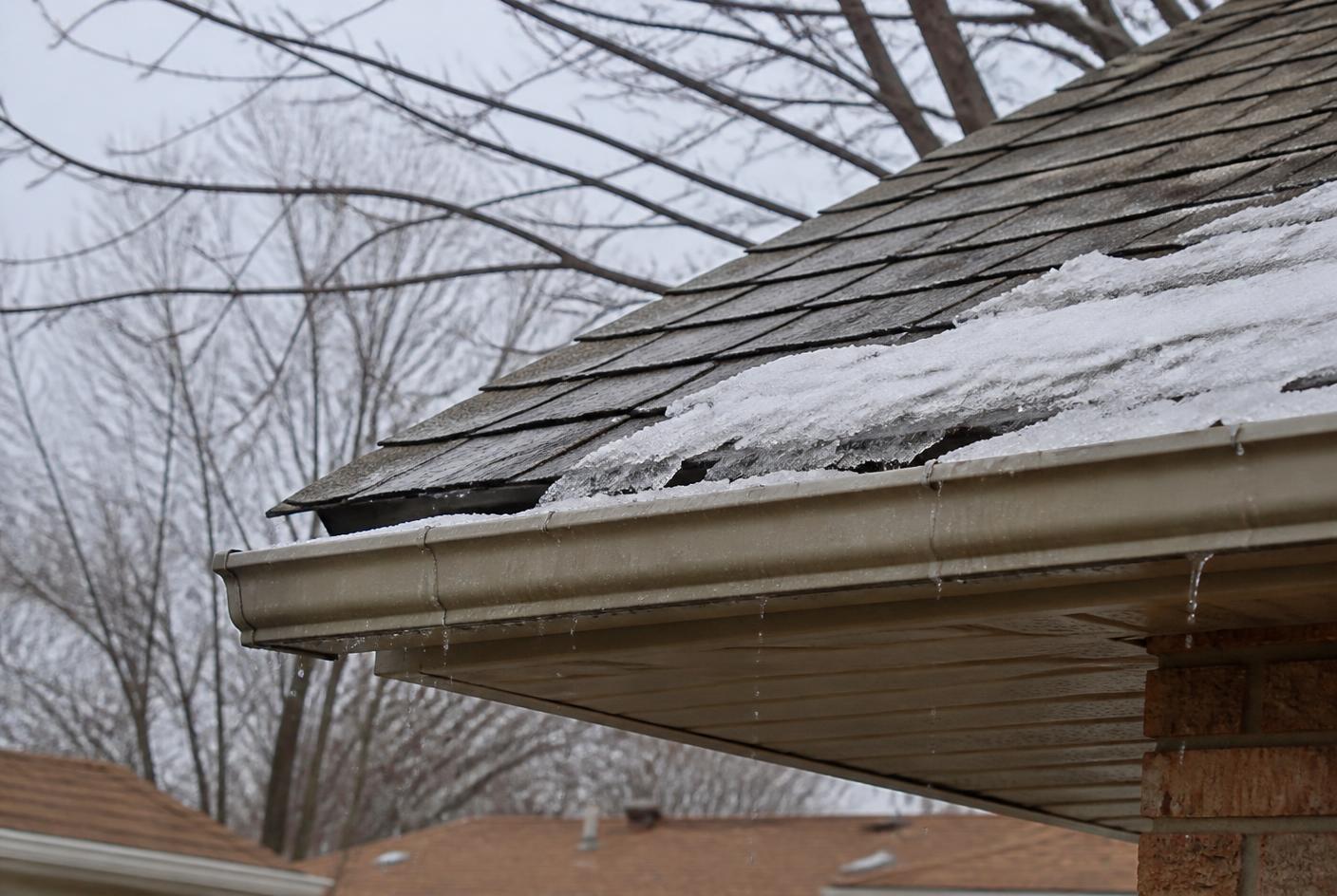
Every March, we start getting calls from homeowners who spent the winter ignoring a small stain on their ceiling. By the time spring rolls around, that stain has a friend. Sometimes two.
Ontario winters are genuinely hard on roofs. The freeze-thaw cycle alone — where temperatures swing above and below zero repeatedly — does things to shingles, flashing, and sealants that most people don't see until water is already inside the house.
The good news: a basic spring roof inspection takes about 20 minutes and can catch problems while they're still cheap to fix. Here's exactly what to look for.
A quick note before you start: Most of this inspection can be done from the ground with a good pair of binoculars, or safely from a ladder at the eave — you don't need to walk the roof. If you spot something that needs a closer look, that's when you call a professional. A fall from a wet roof in March isn't worth it.
Start From the Ground — What You Can See Without a Ladder
You'd be surprised how much shows up from the street. Walk around the full perimeter of the house and look up. Take your time.
Missing or displaced shingles. Wind events in the GTA — especially the November and January storms we've been getting — pull shingles loose or pop them off entirely. Look for any obvious bald patches, dark spots where the underlayment is exposed, or shingles sitting at a weird angle compared to their neighbours.
Shingle edges that are curling up. This one's easy to spot from the ground. If the corners or edges of shingles are lifting — curling up or cupping downward — the material is aging out. It won't survive another winter without letting water underneath.
Sagging areas. Any section of the roof that looks like it's dipping or bowing inward is a red flag. That's usually a decking or structural problem, not just a surface issue. Don't leave it.
Debris in valleys and on the roof surface. Leaves, branches, and built-up debris from winter hold moisture against the shingles. Check the valleys — the V-shaped channels where two roof slopes meet — as those are the spots most likely to trap standing water.
Check Your Eavestroughs and Downspouts
This is one of the most skipped steps and one of the most important.
Granules in the eavestrough. Asphalt shingles shed granules over time — but after a hard winter, a significant amount showing up in your eavestrough means the shingles are deteriorating faster than they should be. A few granules is normal. A pile of them is a sign your roof is getting near the end of its life.
Separated or sagging eavestrough sections. Ice weight over winter pulls eavestrough brackets loose and can separate joints. Walk the line and look for any sections pulling away from the fascia board, or spots where water will clearly pool instead of drain.
Downspout blockages. Run a hose through the downspout if you can. If water backs up or drains slowly, there's a blockage — usually leaf debris or ice damage. Blocked downspouts direct water back toward your foundation and soffit. If yours need attention, our eavestrough cleaning team can help.
Get on a Ladder at the Eave — What to Look For Up Close
You don't need to walk the roof for this. Standing at the top of the ladder at eave height gives you a close look at the most vulnerable spots.
Flashing around chimneys, vents, and skylights. Flashing is the metal that seals the joints between your roof and anything that sticks through it. It expands and contracts with temperature — and after an Ontario winter, the sealant around it often cracks or pulls away. Run your eyes along every joint and look for gaps, lifted edges, or rust streaks coming down from it.
Soffit and fascia condition. Look at the underside of your roof overhang. Soft spots, peeling paint, or dark water stains on the soffit and fascia mean moisture is getting in somewhere above. Animals also love to push through damaged soffit in spring — look for any holes or gaps at the edges.
Ice dam staining. If you had ice dams this winter — those ridges of ice that form at the eave line — there's often a waterline stain left on the fascia or soffit afterward. That stain tells you water was sitting and pooling under your shingles. It may have already worked its way inside.
The Quick Reference Checklist
Here's everything in one place. Work through it top to bottom:
- Shingles (ground level): Missing, cracked, curling, or bald patches
- Roof surface: Sagging sections, debris buildup in valleys
- Eavestroughs: Granule buildup, separated joints, sagging sections
- Downspouts: Blockages, poor drainage, separation from wall
- Flashing: Lifted edges, cracked sealant, rust staining around chimneys/vents
- Soffit & fascia: Water stains, soft spots, holes, peeling paint
- Attic (from inside): Daylight through roof boards, staining, moisture on insulation
- Interior ceilings: New water stains or bubbling paint since November
Don't Skip the Attic
This is the step most homeowners miss because it means going into the attic with a flashlight. But it's often the first place winter damage shows up, before it comes through the ceiling.
Look for:
- Daylight coming through roof boards — any light means a gap
- Dark staining or wet patches on the roof decking or rafters
- Compressed or damp insulation — moisture ruins insulation fast
- Frost or ice residue on the inside of the roof sheathing — a sign of poor ventilation that made ice dams worse this winter
If the attic smells musty or you spot any mould, that's a call-a-professional situation, not a wait-and-see one.
When to Stop Inspecting and Start Calling
A few things that mean you should skip the DIY approach and get a professional up there:
- Any visible sagging, soft spots, or structural concerns
- Active water staining that appeared this winter and hasn't dried out
- Flashing that's clearly lifted or missing entirely
- A roof that's 18+ years old — at that age, an inspection tells you if you're looking at a roof repair or heading toward a full roof replacement
- Anything you're not comfortable getting close to safely
We do free roof inspections across the GTA — Toronto, Mississauga, Brampton, Oakville, Burlington, Hamilton. If you spotted something on this checklist and you're not sure how serious it is, that's exactly what we're there for.
Spotted Something? We'll Come Take a Look — Free
Ontario Tech Roofing has been serving GTA homeowners since 1998. Call us at 905-616-4408 or book a free inspection online — we'll give you a straight assessment and tell you exactly what needs attention, if anything.
Questions Homeowners Ask Us Every Spring
How often should a roof be inspected in Ontario?
Once a year is the standard recommendation — and spring, right after winter, is the best time to do it. If you've had a major storm, heavy ice accumulation, or you're seeing anything unusual inside the house, don't wait for the annual check.
What does an ice dam actually do to a roof?
Ice dams form when heat escapes through the roof, melts snow at the peak, and that water refreezes at the cold eave line. When it backs up, it works under shingles and into the roof decking. You often don't see the damage until spring when the ice melts — by which point it's already inside.
My ceiling has a new stain — is that definitely a roof problem?
Not always. Ceiling stains can also come from a plumbing leak or condensation in an under-insulated space. But if the stain appeared or got worse over winter, the roof is the first thing to rule out. Don't ignore it hoping it dries up — most water damage gets worse, not better, on its own.
Is spring or fall better for roof repairs in the GTA?
Both work. Spring catches winter damage early. Fall gets you ready before the next freeze. The worst time to deal with a roof problem is mid-winter, when you're limited in what can be done safely and ice is actively making things worse. So: whenever you notice it, act on it — don't push it to a more convenient season.
Get Your Free Roof Estimate
Ready to protect your home? Ontario Tech Roofing has served homeowners across the GTA since 1998. Book your free estimate or call us at 905-616-4408.