
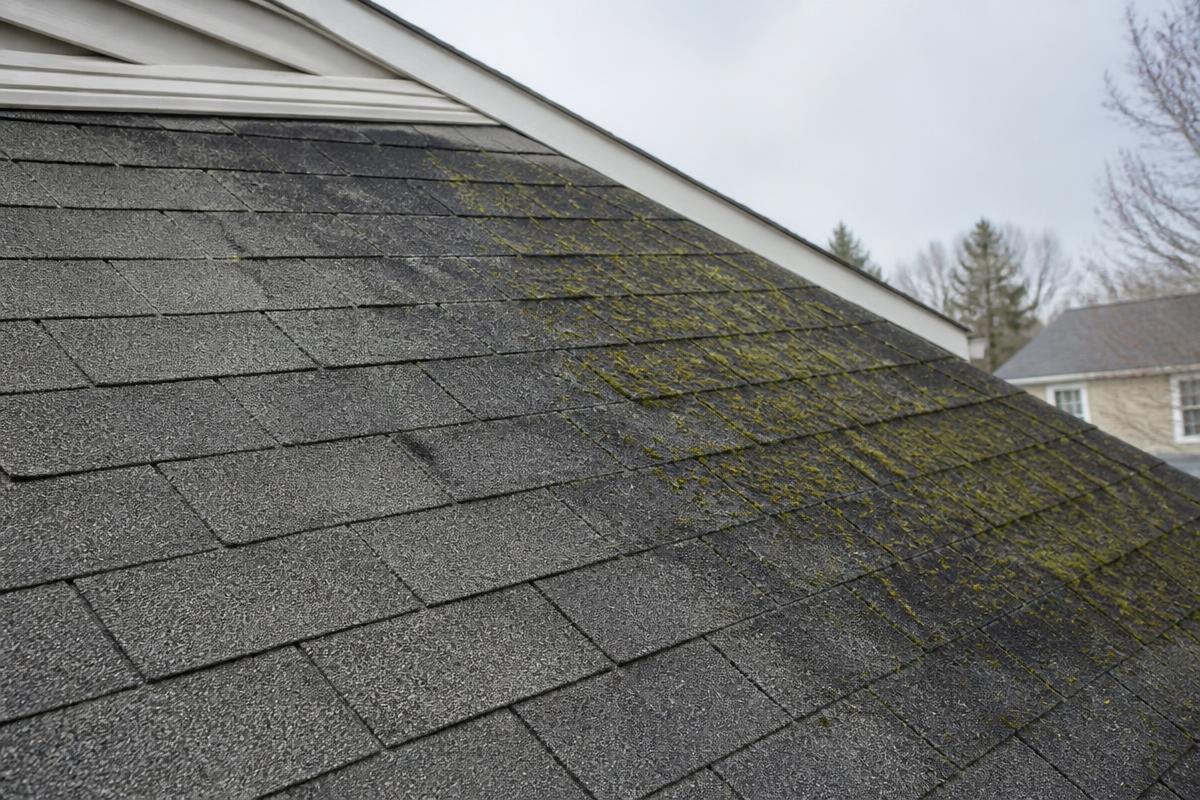
We got a call last spring from a homeowner near Oakville who wanted her whole roof pressure washed. Dark streaks down one side, patchy green moss creeping along the shaded slope over the garage. Understandable; it looked bad from the street. We talked her out of the pressure washer on the phone before we even got there, and honestly that call happens a few times a month once the weather warms up.
Here's the thing most people don't realize: that staining isn't dirt, and cleaning it wrong can cost you more than leaving it alone.
So What's Actually Causing the Black Streaks?
It's algae, almost always. Specifically a type called Gloeocapsa magma, which is everywhere on asphalt shingle roofs in this part of Ontario. It eats the limestone filler in the shingles themselves, and it spreads by spore, carried on the wind, dropped by birds, washed down from a neighbour's roof during a storm.
North-facing slopes get it worst. Shaded valleys too. Basically anywhere on the roof that stays damp a little longer after rain, because sunlight is really the only thing keeping algae from taking over everywhere. If you've got mature trees nearby, or half the street already has streaking, that's not a coincidence, spores travel roof to roof pretty easily.
Moss Is a Different Problem, and Arguably a Worse One
Moss needs shade and moisture too, but it behaves differently once it's established. It actually roots into the shingle granules, and then it just sits there holding water like a sponge pressed against the roof surface.
That's the part that matters. It's not sitting on top of a dry roof looking messy; it's keeping that whole section wet for days after everything around it has dried out. Give it a winter or two and that moisture starts working under the shingle edges. Freeze it, thaw it, freeze it again, and you get lifted or cracked shingles in a spot that would've otherwise been fine.
Clogged gutters make this so much worse. Water that should be draining off just backs up instead, sitting right at the roofline where moss already loves to grow. If it's been a year or two since anyone cleaned yours out, that's usually the first thing we'd look at alongside any moss removal; we run an eavestrough cleaning service and honestly it's rare we do one job without recommending the other.
Please Don't Just Pressure Wash It
This is the mistake we see constantly. Power washing looks like the fast, obvious fix, and it does make a roof look clean for about a season. What it also does is strip the protective granules straight off the shingle. Once those granules are gone, the shingle underneath is bare and exposed to UV, and that roof is now aging faster than it should. We've walked roofs that got power washed two summers ago and are already showing wear you'd expect from a roof twice that age.
What actually works instead:
- A gentle bleach-and-water mix, roughly fifty-fifty, sprayed on with a low-pressure garden sprayer, left to sit for a while, then rinsed off with a regular garden hose. No scrubbing, no pressure. Just time doing the work.
- Commercial roof-safe cleaners are an option too, made specifically for asphalt shingles, and they tend to be a bit gentler than a bleach mix if your shingles are already older or brittle.
- Manual removal for stubborn moss, a soft brush, light hand pressure, patience. Never a stiff brush, never a scraper. It's slow, which is exactly why almost nobody does it this way, and exactly why the pressure washer keeps winning.
- Zinc or copper strips along the ridge if you want to actually prevent it from coming back rather than just cleaning it once. Rain carries trace amounts down the slope every time it rains, and that keeps new growth from establishing. Doesn't touch what's already there, but it buys you a lot of time before you're back to square one.
When It's More Than a Cleaning Job
If the growth's spread past a small patch, or the roof feels soft or spongy underfoot anywhere near it, that's decking damage; not something a cleaning solves. That's also a good excuse to have the rest of the roof looked at while someone's already up there, because moss rarely shows up alone on a roof that's getting older. Our roof inspection service covers this properly, including attic ventilation, which is very often the actual reason one section of roof stays wetter than the rest of it.
And if you've noticed any staining or dripping inside the house since the moss showed up outside, don't ignore that. Worth a read through our piece on common causes of roof leaks, those two problems show up together more often than people expect.
Questions We Get About This
Will it come back after cleaning?
Probably, eventually, especially on a shaded north slope. That's the whole reason zinc strips are worth the extra cost; cleaning alone is rarely a permanent fix.
Does algae actually shorten how long a roof lasts?
Indirectly, yes. The algae itself isn't eating the shingle. The moisture it holds against the shingle is what does the damage over time, especially through winter freeze-thaw.
Can I just get up there and clean it myself?
You can, but wet mossy shingles are slippery, and the bigger risk honestly isn't falling; it's someone scrubbing too hard or grabbing a pressure washer and voiding the shingle warranty in twenty minutes flat.
Not Sure How Bad Yours Actually Is
A few streaks and a patch of moss on one slope isn't automatically an emergency. But it's easy to underestimate how long that section has been sitting wet, and what that's actually doing underneath. If you'd rather have someone take an honest look than guess from the driveway, reach out for a free estimate; we'll tell you straight whether it's a cleaning job or something bigger.
Get Your Free Roof Estimate
Ready to protect your home? Ontario Tech Roofing has served homeowners across the GTA since 1998. Book your free estimate or call us at 905-616-4408.